
Welding is defined as a process of joining materials together, metal or plastics, by using high heat to fuse the parts to one another. Our tuition covers the main welding processes used throughout the industry today.
MIG/MAG
MIG welding is an arc welding process that uses electricity in which a continuous solid wire electrode is fed through a welding gun and into the weld pool, joining the two base materials together. A shielding gas (argon, carbon dioxide or a mixture) is also sent through the welding gun and protects the weld pool from contamination or atmospheric gases that would otherwise weaken the weld.

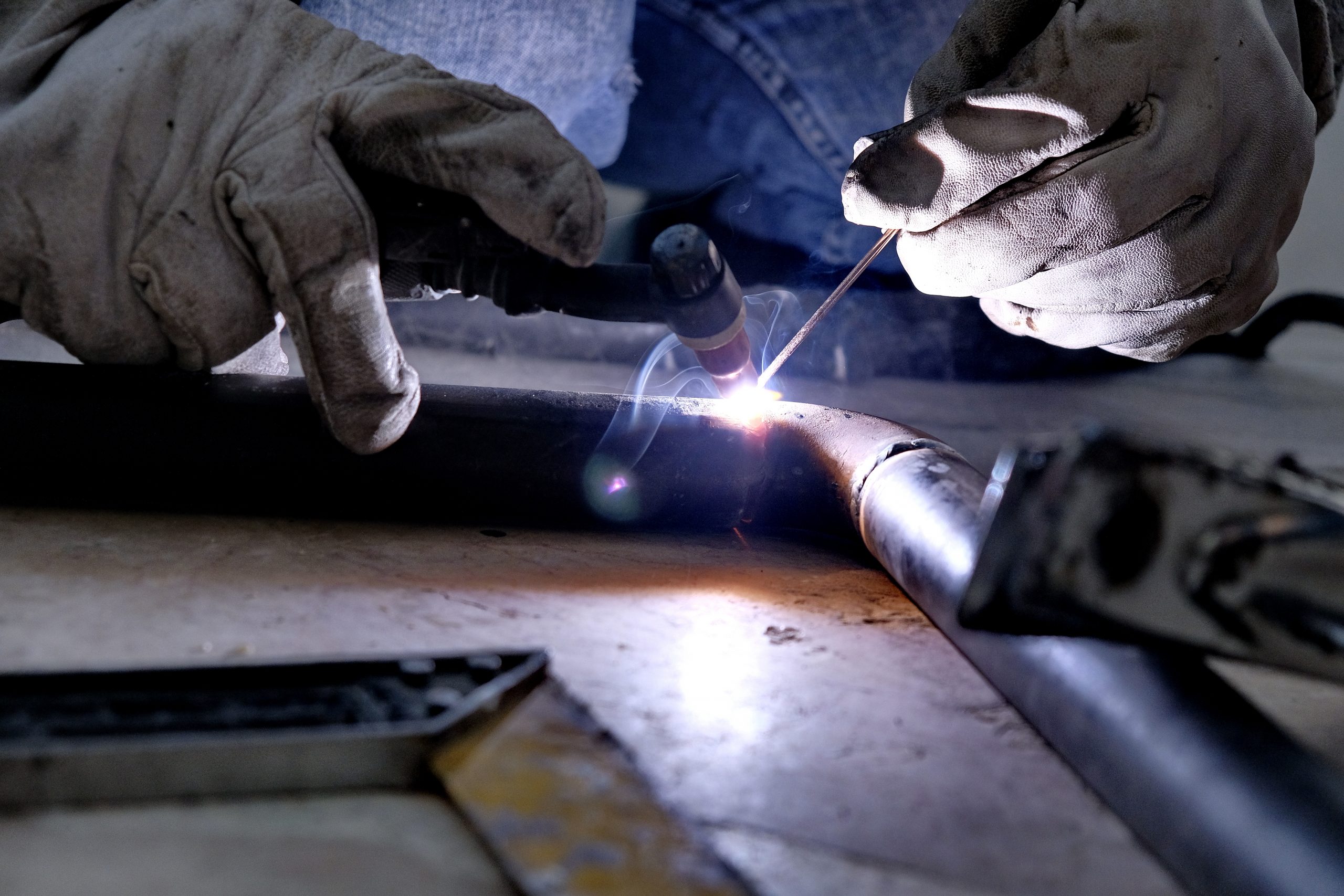
TIG
Gas tungsten arc welding is a process that uses a non-consumable tungsten electrode to produce the weld. Best suited to handling tricky welds such as curves, S shapes, corners or where the weld is going to be visible and where accuracy and finish is important. The weld area and electrode are protected from oxidation or other atmospheric contamination by an inert shielding gas.
MMA
Manual Metal Arc (MMA) welding is the most flexible and one of the most widely used arc welding processes. It involves creating a high-intensity electric arc between a shielded metal-cored electrode and the metals to be joined.
The heat of the arc simultaneously melts the parent metal and the electrode which mix together to form a continuous solid mass, when cool. The central metal electrode or core wire acts as a consumable, providing the filler metal for the weld.

FCAW
Flux-Cored Arc Welding (FCAW) uses the heat generated by an electric arc to fuse the metal in the joint area. The arc is struck between a continuously fed consumable filler wire and the workpiece, melting both the filler wire and the workpiece in the immediate vicinity.
There are two basic process variants, self shielded FCAW (without shielding gas) and gas shielded FCAW (with shielding gas). Usually, self-shielded is used in outdoor conditions where any wind may blow away a shielding gas.
